
How to Check Criminal History in Coffee County
Begin by deciding whether the needed fact is a filed case, a present booking, an agency report, or a Georgia felony conviction. Coffee Superior and State Court files are available through the provider links in the Georgia Courts E-Access directory, though an account is required. The Coffee County Sheriff links to a free in-custody and wanted interface, while its NextRequest portal accepts requests for sheriff-created records that are not displayed online.
Collect the person's complete legal name, date of birth when known, spelling variants, approximate event date, arresting agency, and case or report number. These details separate people with similar names and help a custodian locate the correct file. A name match alone is not proof of identity; Georgia's public felony product specifically warns that fingerprints are the conclusive comparison.
- Choose the record type and its custodian: clerk for a prosecution, sheriff or police for an arrest report, jail for current custody, or GBI for statewide history.
- Search with the most exact identifiers available and select Coffee County and the correct court or agency.
- Compare date of birth, middle name, event date, case number, and physical descriptors before treating a result as the right person.
- Open or request the underlying case, booking, or incident file to distinguish an allegation from the final disposition.
- Order a certified court copy or use the appropriate GCIC channel when an official document or identity-confirmed result is required.
Three Douglas Records Counters
Coffee County's record geography explains many failed searches. The Clerk of Superior, State and Juvenile Courts keeps filed felony and misdemeanor cases at 101 South Peterson Avenue, Suite B-18. The Sheriff, county jail, Magistrate Court, and Douglas Municipal Court courtroom operate at 825 Thompson Drive. Douglas Police incident and accident report copies are handled at 225 West Bryan Street. The offices are close geographically but remain different legal custodians.
Court Clerk
101 S. Peterson Ave., Suite B-18, Douglas, GA 31533
912-384-2865
Monday-Friday, 8:30 a.m.-5 p.m.
Sheriff and Jail
825 Thompson Drive, Douglas, GA 31535
Office: 912-384-4227
Jail: 912-383-6398
Douglas Police Records
225 W. Bryan Street, Douglas, GA 31533
912-384-2222
Monday-Friday, 8 a.m.-5 p.m.
Official Georgia Background Checks
The Georgia Bureau of Investigation's Georgia Crime Information Center is the central criminal-history repository. Georgia Felon Search is its public name-based product for final Georgia felony convictions. It requires a first and last name, date of birth, and sex, costs $15 for each transaction or selected possible match, and charges even when no record is found. It omits misdemeanors, juvenile histories, restricted material, pending arrests without a final felony conviction, and out-of-state records.
The live Georgia Felon Search portal shows the official entry route.
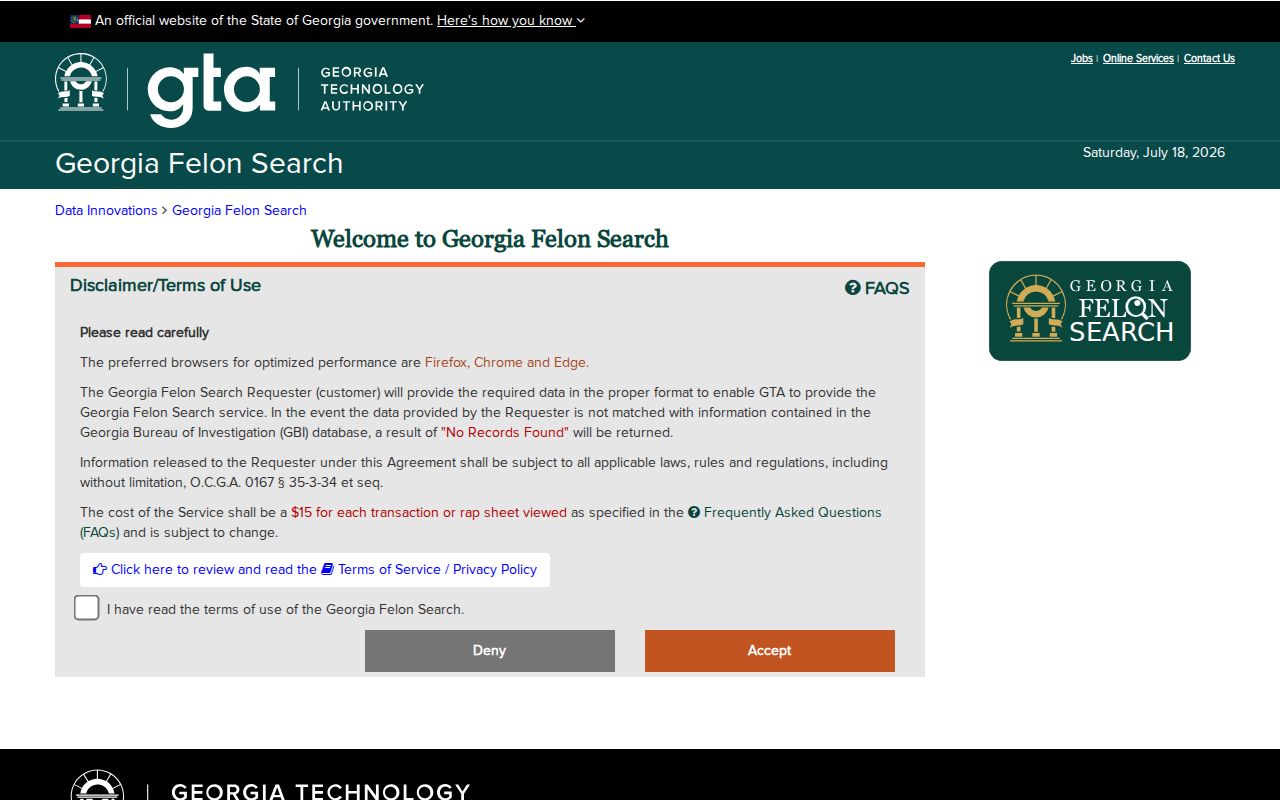
Its search form leads to possible matches, not fingerprint-confirmed identity.
The state's Georgia Felon Search overview explains the fee, identifiers, and exclusions.
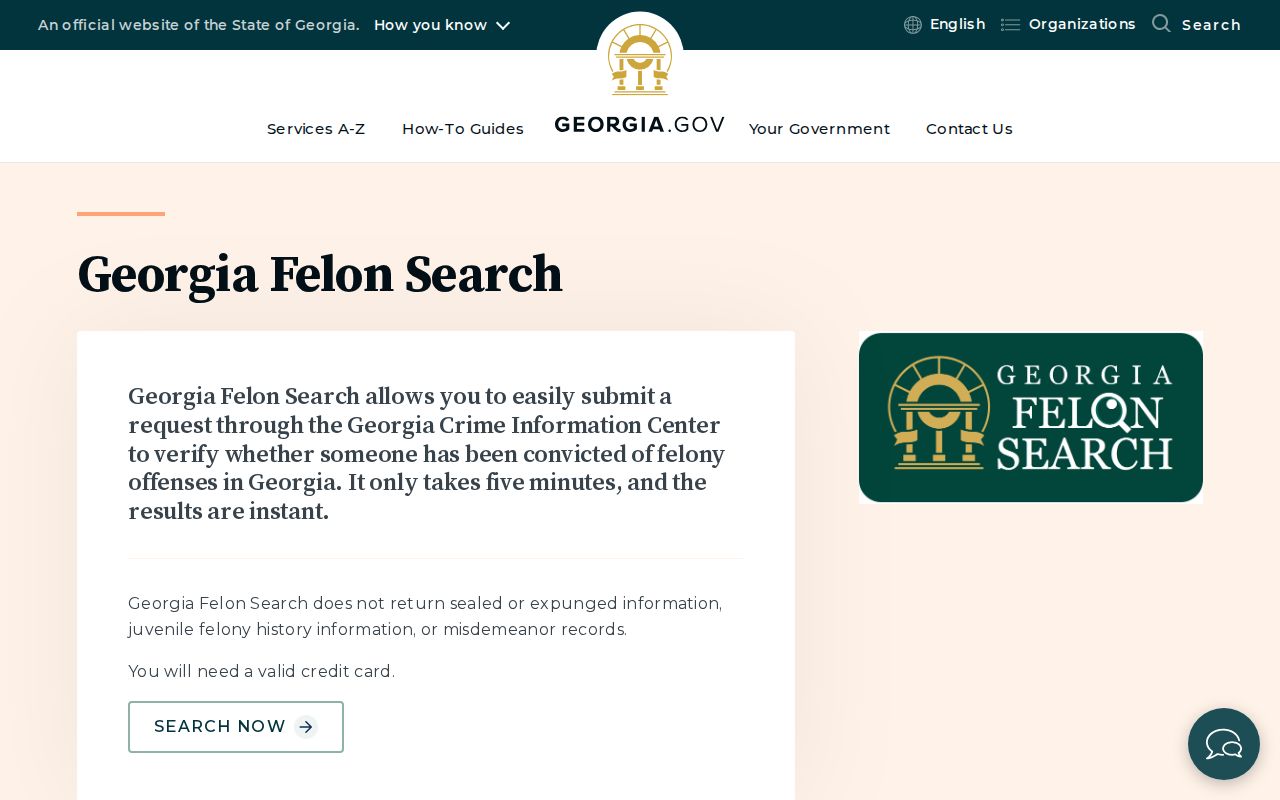
That scope statement is essential when comparing the product with a court docket or full GCIC review.
Fingerprint checks use the Georgia Applicant Processing Service through IdentoGO. GAPS is authorization-based: the requesting agency supplies a program or account number, the subject registers and visits a fixed fingerprint site, and the agency normally receives results within 24 to 48 hours. For personal review or a formal record challenge, follow GCIC's inspection procedures rather than treating a public name result as conclusive.
The GBI GAPS instructions describe the agency-controlled workflow.
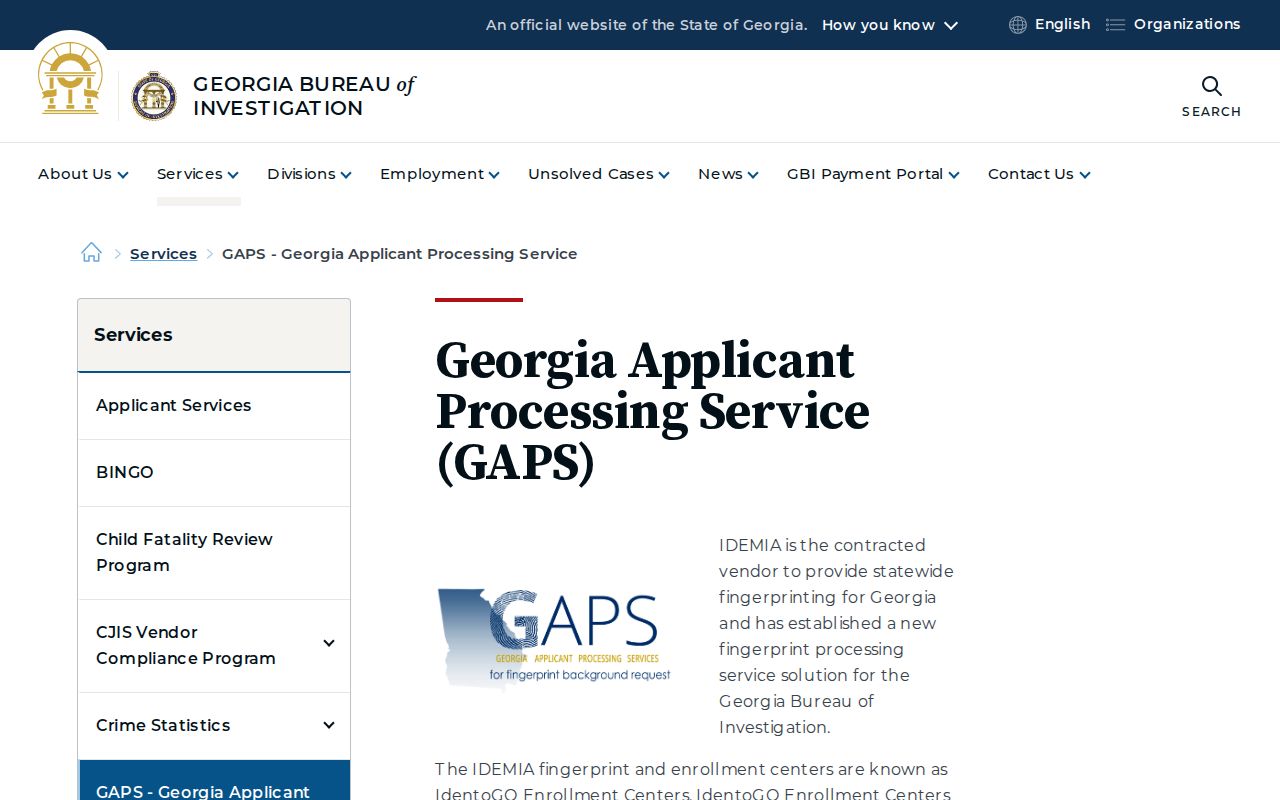
They distinguish an authorized fingerprint transaction from a public name lookup.
The Georgia IdentoGO portal supplies the enrollment and appointment channel.
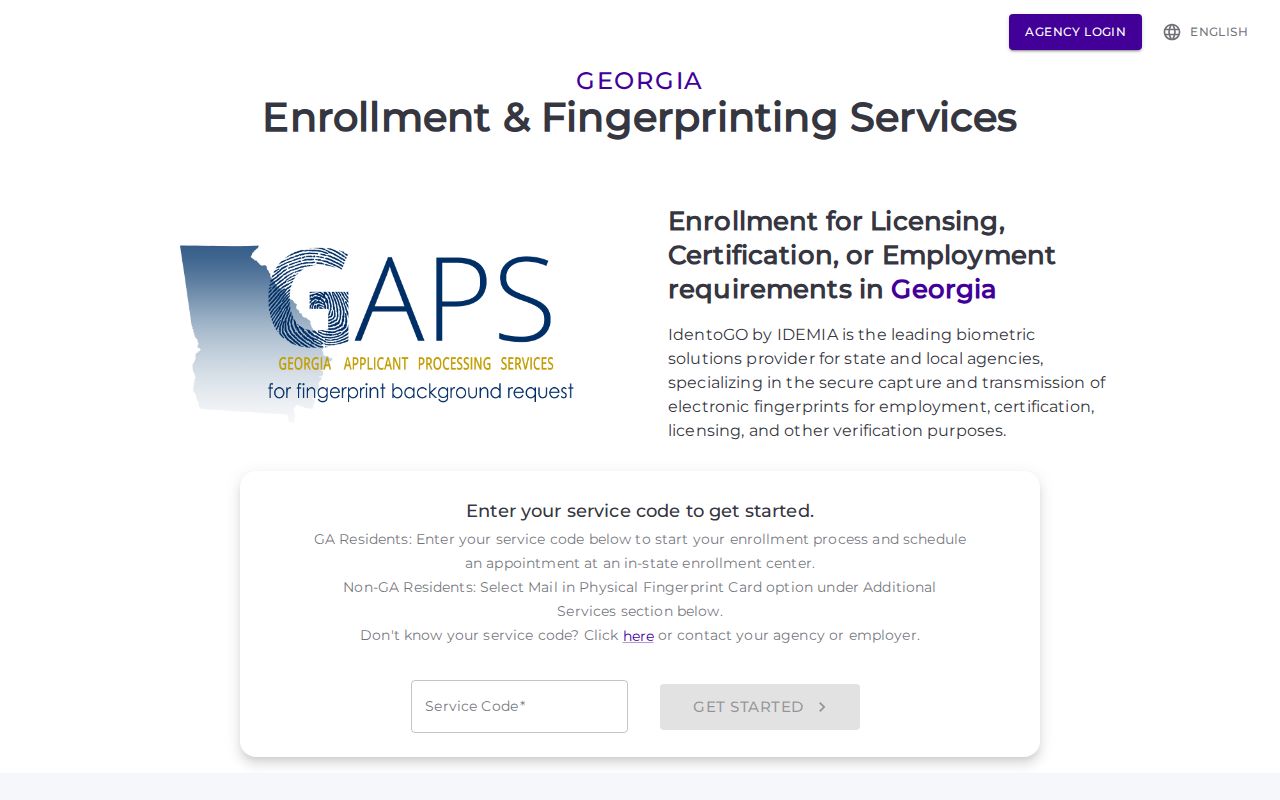
An agency program number controls which authorized result is returned.
From Booking Fingerprints to GCIC
An arresting Georgia agency creates the incident and arrest material. For a fingerprintable offense, it transmits fingerprints and charge data to GCIC, which associates the submission with a state identification record. A prosecutor and court later report charging decisions and final dispositions; Georgia custodial information can be added if the person enters a correctional facility. That sequence means a new arrest and its outcome may appear at different times.
The GBI description of GCIC identifies the repository's role in the reporting cycle.
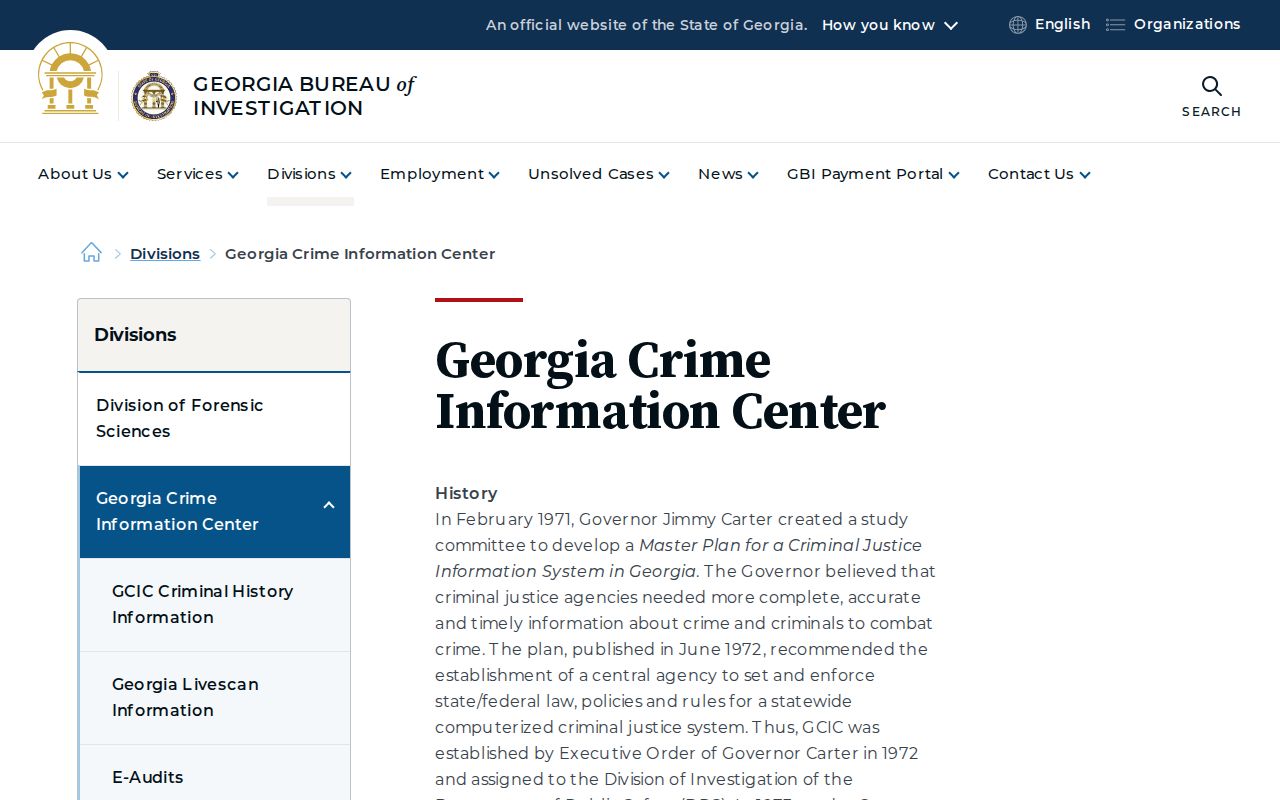
GCIC connects qualifying submissions with later dispositions, but local reports and court files remain separate.
If a GCIC history lacks a disposition or contains an error, GBI directs the subject to the court or agency responsible for the missing submission. The Coffee clerk's file may show a final order before that change reaches a statewide history. Conversely, Georgia Felon Search is deliberately narrower than the full computerized history because it returns final Georgia felony convictions rather than every arrest cycle.
Types of Criminal Records in Coffee County
A criminal record can mean several documents with different custodians and legal significance. Sheriff and city police files record allegations and enforcement activity. Court dockets and filings show whether a prosecutor filed charges and how a judge resolved them. GCIC histories connect qualifying Georgia arrests to submitted dispositions, while corrections, supervision, warrant, and registry systems answer narrower status questions.
The Georgia Sex Offender Registry illustrates one status-specific system.
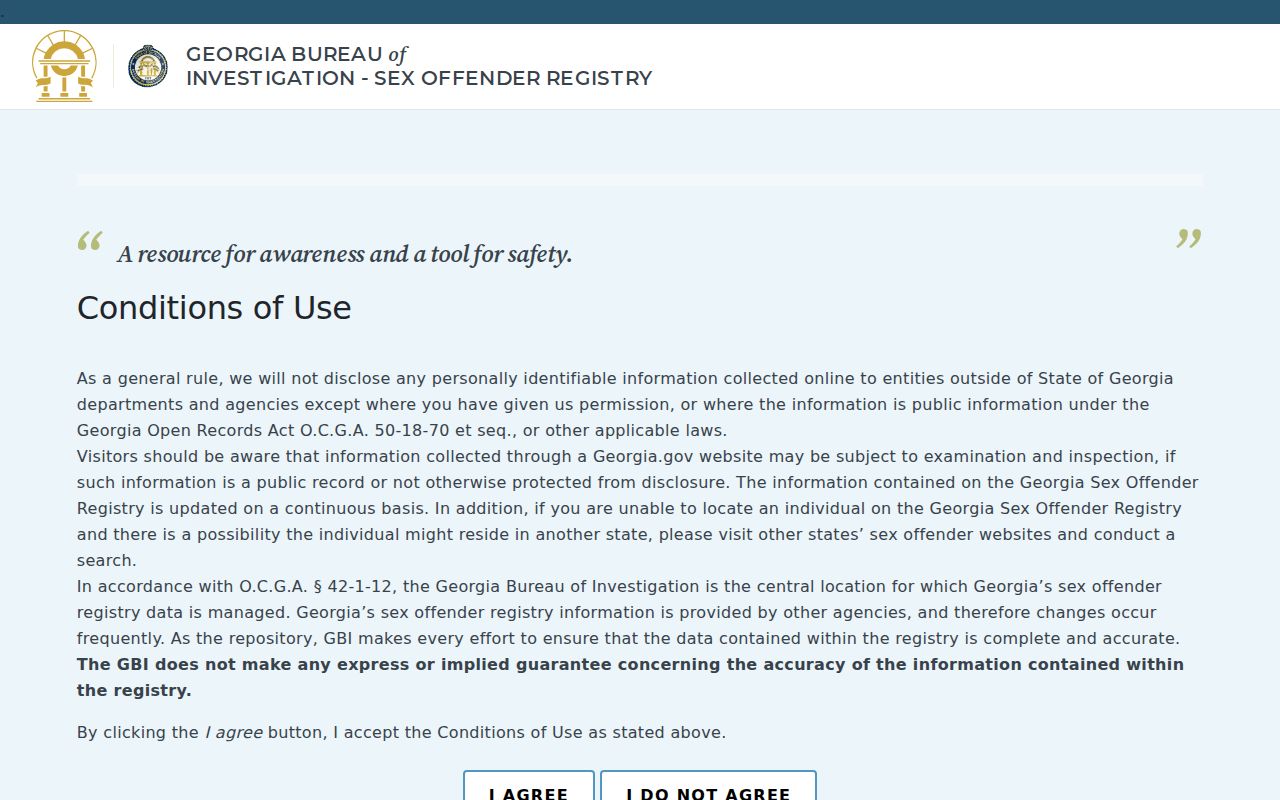
Its profiles serve registry awareness and do not replace a Coffee court file or GCIC history.
Use the record closest to the fact being verified. The sheriff cannot certify a Superior Court judgment, the clerk does not replace a police incident report, and a jail search does not show every historical booking. A registry profile is a public-safety record, not a general rap sheet.
- Arrest and booking records - created by the arresting agency and county jail, documenting intake rather than guilt.
- Criminal court case files - pleadings, docket events, orders, pleas, dispositions, and sentences kept by the clerk.
- Conviction and history entries - GCIC data assembled from agency, prosecutor, court, and custodial submissions.
- Warrants - judicial process checked through the sheriff and the court that issued it; wanted cards are not a complete list.
- Supervision and registry records - status-specific information published by DCS, the Parole Board, GDC, or the Georgia Sex Offender Registry.
Coffee Sheriff Records Through NextRequest
The Coffee County Sheriff's Open Records page directs requesters to the county NextRequest system. Describe the existing record, rather than asking the agency to answer a broad question. Include the subject or involved party, incident or booking date, location, report number if known, arresting unit, and the specific document sought. The portal also accepts requester contact information and an optional attachment.
| Portal control | How it helps |
|---|---|
| Request description | Identifies the report, booking file, date range, and desired format. |
| Name and email | Provides a route for clarification and delivery notices. |
| Phone and address | Supports follow-up or mailed-copy arrangements when applicable. |
| Attachment | Adds a prior report, case list, or other narrowing document. |
| Account controls | Allow a requester to follow an existing submission. |
No official sheriff source reviewed published a fixed local copy fee, clearance-letter fee, ID rule, direct records email, or guaranteed completion time, so confirm those points with the agency. Under the Georgia Open Records Act, the agency generally must respond within three business days by producing available material or explaining when and at what cost it can be produced.
What a Coffee County Criminal Record Shows
Contents depend on the product. A court file may identify the parties, court, case number, charge statutes, accusation or indictment, filings, hearing events, plea, judgment, sentence, bond, fines, and costs. A booking entry focuses on intake and custody. A GCIC history combines identifying data with reported arrests, dispositions, and Georgia custodial information. Read the source label and status date before comparing fields.
| Name & Identifiers | Legal name, aliases, birth information, sex, and record-specific identification numbers. |
|---|---|
| Arrest / Booking Data | Arresting agency, date, alleged charges, booking identifiers, bond, and custody status where published. |
| Charges & Statutes | Offense descriptions, Georgia Code citations, counts, and later amendments in the court file. |
| Disposition | Dismissal, nolle prosequi, plea, acquittal, conviction, or other reported outcome. |
| Sentence | Confinement, probation, fines, conditions, credit, or other terms in the judgment. |
| Custody / Supervision Status | Current jail, GDC, probation, or parole information from the agency responsible for that status. |
When a Jail Search Goes Empty
The sheriff-linked Community Notification interface is for current Coffee County custody and selected wanted information, not a permanent arrest archive. JavaScript or anti-bot verification may also interrupt access. If a known booking is absent, call the jail at 912-383-6398 and ask whether the person was released, transferred, or booked under a different spelling. Request the historical booking file through NextRequest when the needed fact is not current custody.
A sentenced state prisoner may appear instead in GDC Find an Offender, which supports searches by name, physical description, GDC ID, or case number. Federal custody uses the Bureau of Prisons locator. A transfer does not move the original Coffee arrest report or court case; it only changes which custodial agency can confirm the person's present location.
The official GDC Find an Offender page displays the state custody search and its cautions.
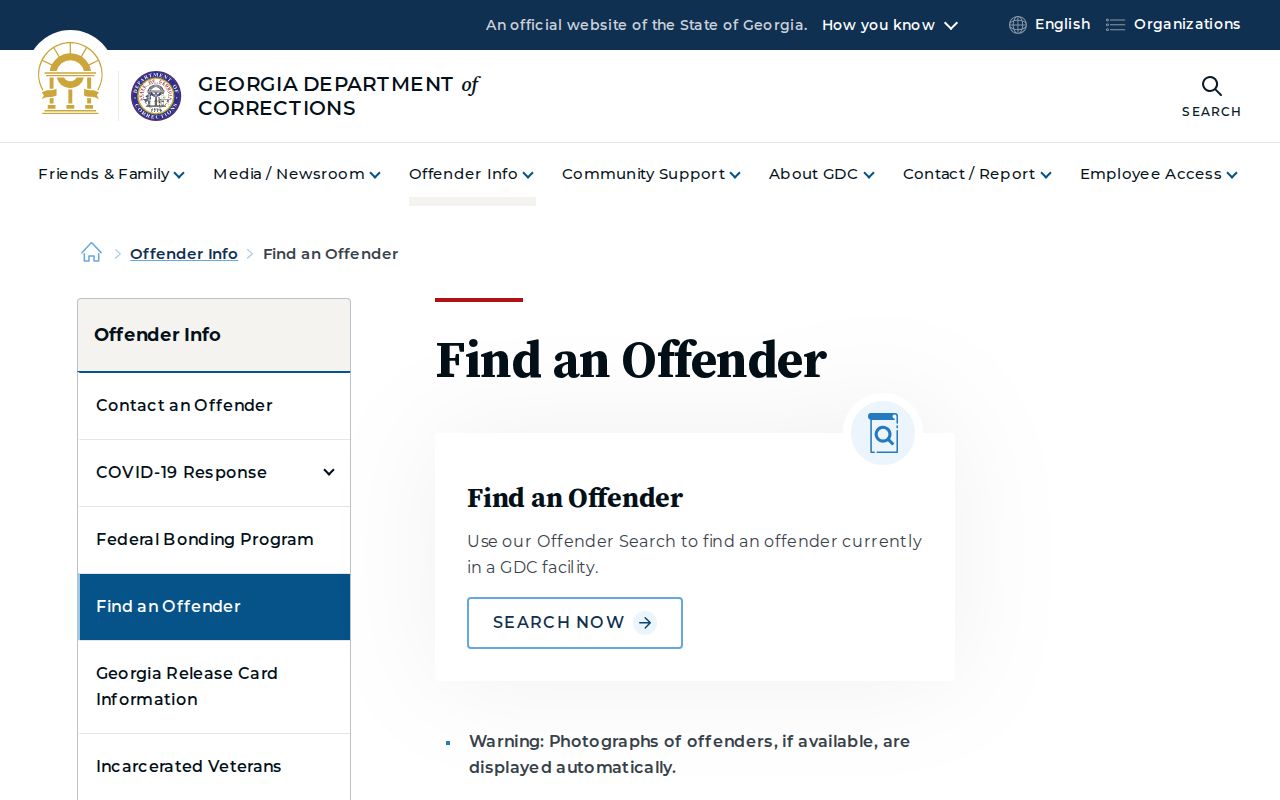
Use it only after distinguishing state imprisonment from current Coffee County jail custody.
The Georgia State Board of Pardons and Paroles provides separate parole lookups.
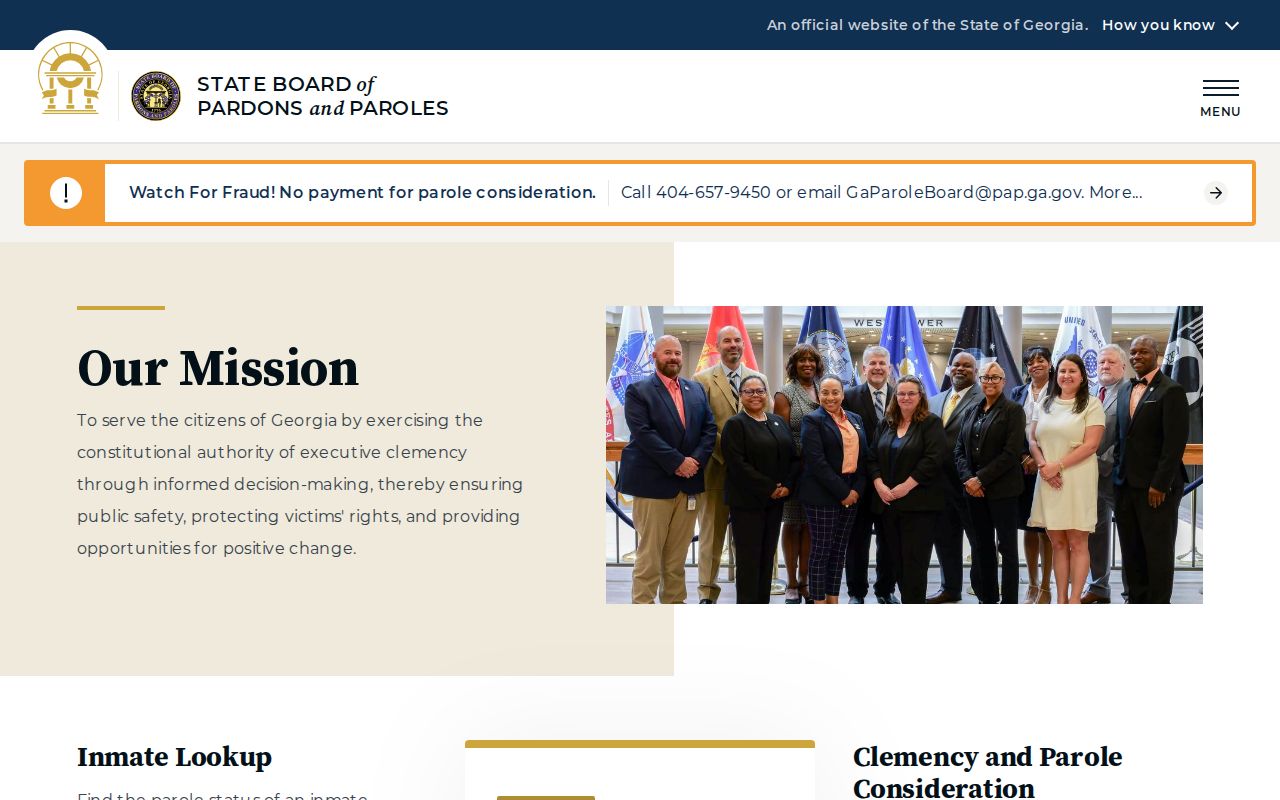
The Board makes parole decisions, while the Department of Community Supervision supervises releasees.
Public Access Laws for Coffee County Criminal Records
The Georgia Open Records Act governs requests to Coffee County agencies, but it does not make every piece of a criminal file public. Agencies can redact protected identifiers and withhold material covered by a specific exemption, including confidential juvenile, medical, security-sensitive, or active-investigation information. GCIC dissemination statutes separately control statewide criminal-history products. Court access and record restriction rules affect what a clerk or online provider can release.
The Attorney General's Open Government FAQ explains the request and response framework.
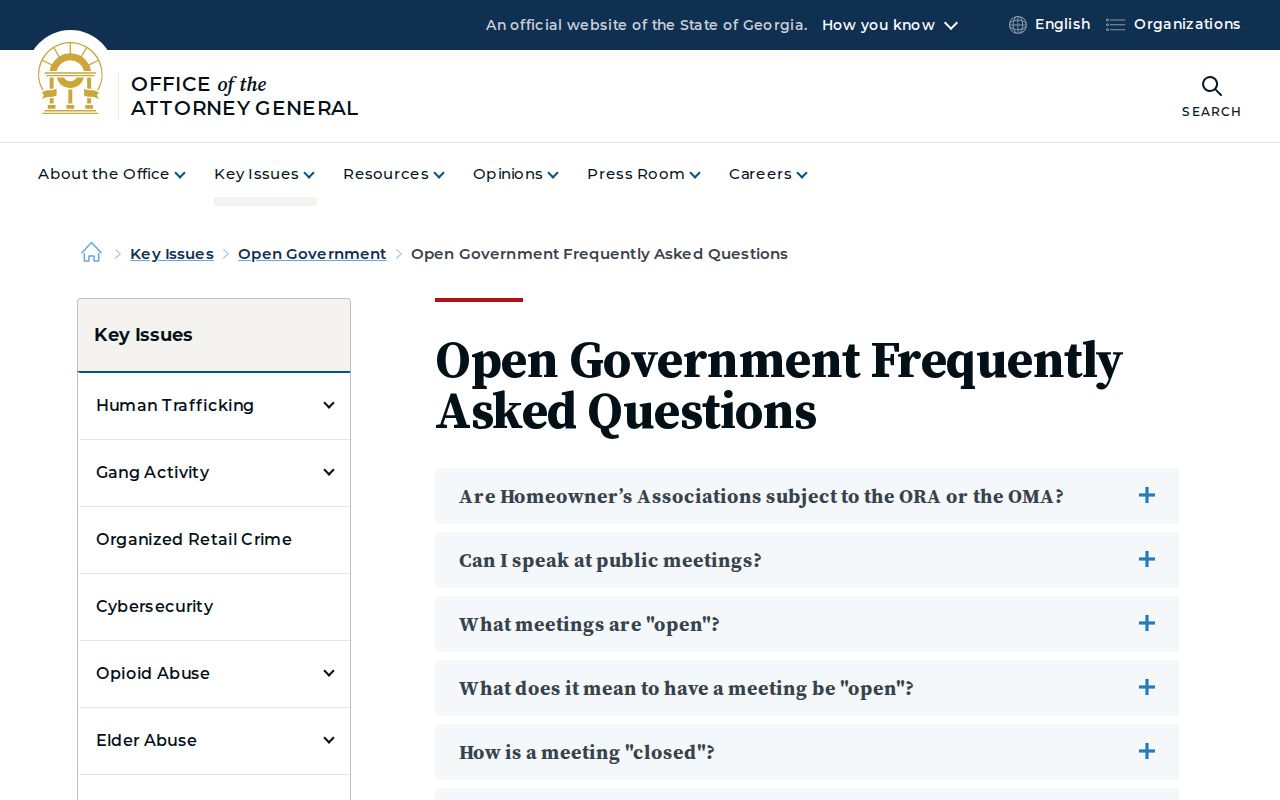
It also explains that an agency withholding material should identify the legal exemption.
Key Statutes:
O.C.G.A. § 50-18-70 et seq. - establishes Georgia's presumption of access and the agency response process.
O.C.G.A. § 35-3-34(d.2) - authorizes public name searches for qualifying final Georgia felony convictions.
O.C.G.A. § 35-3-37 - governs restriction of eligible Georgia arrest history from public dissemination.
O.C.G.A. § 42-1-12 - sets Georgia registration and public registry requirements.
Wanted Cards Are Not Every Warrant
The sheriff's published wanted cards are useful leads, but their absence does not establish that no warrant exists. A complete check may require the Coffee County Sheriff, the court that issued the process, and Douglas or another municipal court for a bench warrant tied to a missed local court date. Georgia Courts states that there is no centralized statewide traffic-citation database.
Plan before an in-person warrant inquiry. Georgia's official warrant guidance warns that a person with an active warrant may be taken into custody when appearing at a law-enforcement office. A person checking their own status may want legal advice and should use the sheriff's free inquiry route before traveling.
Have a full legal name, date of birth, and possible issuing jurisdiction ready. The sheriff's tip line is not a records desk, and an anonymous wanted card is not a certified warrant return. For the underlying case, request the docket or order from the clerk after confirming which court issued the process.
Sealed, Expunged, and Restricted Records
Georgia generally uses the term record restriction. Under O.C.G.A. § 35-3-37, restriction limits public access to an eligible arrest cycle but does not destroy the underlying record. Eligibility and routing depend on the arrest date and disposition. Related remedies include First Offender Act discharge and exoneration, sealing of court material, pardon-based restriction, and trafficking-survivor vacatur and restriction.
A restricted GCIC entry is removed from ordinary public dissemination while remaining available for purposes authorized by law. The court file does not automatically vanish merely because GCIC access changes; a separate sealing order may be needed. Juvenile files are subject to their own confidentiality rules. Use GBI's record-restriction instructions and confirm the case disposition with the Coffee clerk before filing.
| Service | Published fee |
|---|---|
| Georgia Felon Search result | $15 per transaction or selected possible match |
| GAPS Georgia-only check | $39.99 total |
| GAPS Georgia/FBI check | $51.99 total |
| GCIC record restriction | $25 |
| Douglas police report copy | $2 |
| Coffee clerk or sheriff copies | Confirm current charge with the custodian |
When the Clerk Is the Search Fallback
Coffee Superior and State Courts appear in Georgia's e-access directory, but access passes through a provider account and Coffee County was not listed in the directory's participating-court table when inspected on July 17, 2026. Online availability can therefore be narrower than the clerk's holdings. For an archived file, missing docket entry, certified disposition, or exact copy question, contact Clerk Stephanie Gillis's office at 912-384-2865.
The official Georgia E-Access directory shows the account warning and provider route.
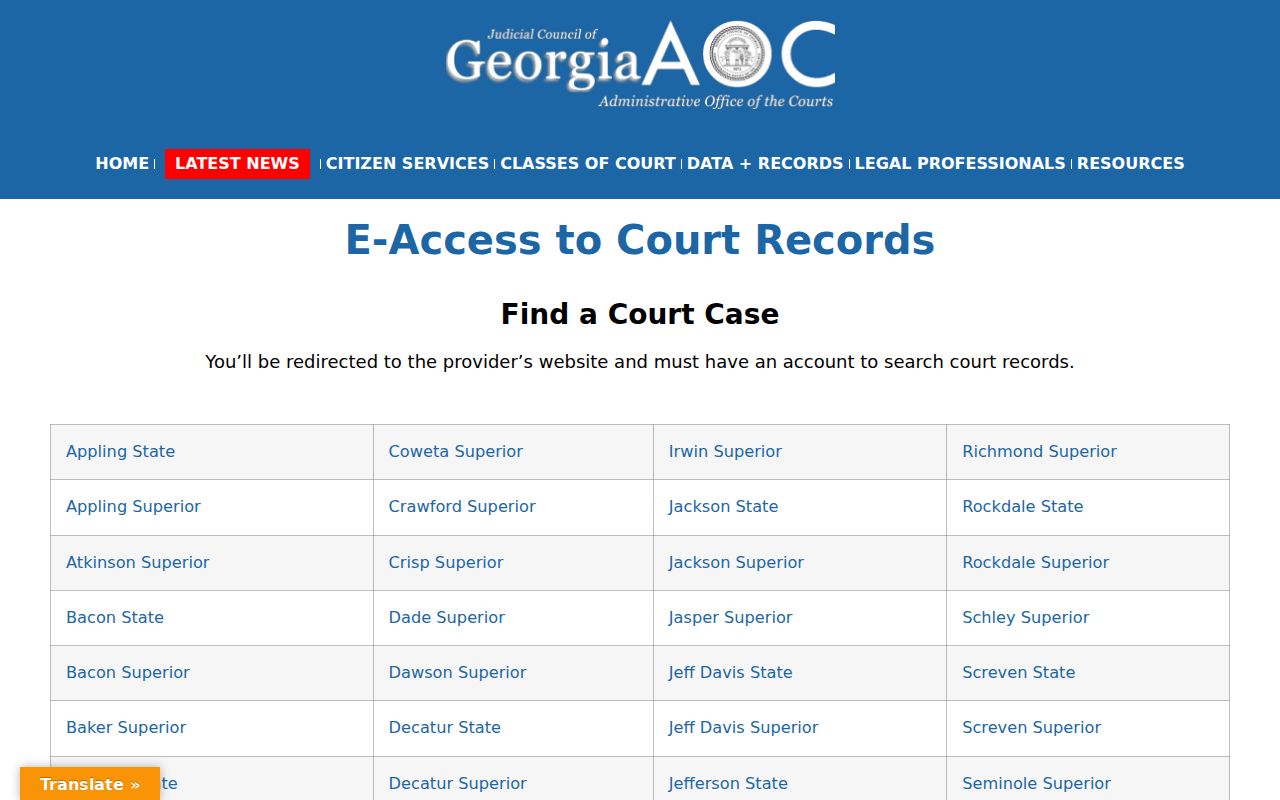
The directory is not a single statewide trial-court database, so the Coffee clerk remains the dependable fallback.
Ask with a case number when possible. Otherwise provide the defendant's full name, approximate filing or arrest date, court level, and charge. Superior Court handles felonies; State Court generally handles misdemeanors. Magistrate Court at Thompson Drive performs warrant, first-appearance, bond, and preliminary functions, but its early-stage record does not replace the later Superior or State Court prosecution file.
Criminal Records by City in Coffee County
Douglas, Nicholls, and Broxton police create their own incident and arrest reports, while their municipal courts keep traffic and ordinance matters. A city arrest may still lead to the Coffee County jail and then to Superior or State Court depending on the charge. Start with the city for its report, the county jail for custody, and the appropriate clerk for the prosecution rather than assuming one city portal covers the whole chain.
Douglas Criminal History
11,828 · Police reports use a $2 counter or mail route; Municipal Court administration is on West Bryan Street.
Nicholls Criminal History
2,909 · City Hall provides an open-record form, and City Court meets on the second Monday.
Broxton Criminal History
1,076 · Police and clerk phone channels replace an online blotter or case search.
Report, Case File, or Rap Sheet
- Sheriff or police report
- Describes an incident, investigation, arrest, or booking from the creating agency's perspective. It can contain allegations that never become a filed charge.
- Court case file
- Documents one prosecution through accusations or indictments, motions, hearings, pleas, orders, disposition, and sentence.
- GCIC criminal history
- Associates identifying information with qualifying Georgia arrest, submitted disposition, and custodial data across agencies.
These products should corroborate one another but are not interchangeable. A Douglas report can precede a county case; a jail entry can disappear after release; and a disposition may be delayed in GCIC even though the signed order is already in the Coffee clerk's file. For the most reliable conclusion, identify the event in the local source and verify its legal outcome with the court.