
Criminal Cases in Coffee County Courts
Coffee Superior Court has exclusive trial jurisdiction over felonies. Coffee State Court generally handles misdemeanor prosecutions. Elisa C. Gillis, the elected Clerk of Superior Court, manages both sets of criminal case files at the Coffee County Courthouse, along with restricted Juvenile Court records. The official Coffee clerk profile lists 101 S. Peterson Avenue, Suite B-18, Douglas, GA 31533, 912-384-2865, and weekday hours from 8:30 a.m. to 5 p.m. Nykke Lee is listed as the Superior criminal contact, while Lorena Hickerson is the State Court contact.
Other Coffee County criminal records live elsewhere. Magistrate Court handles warrants, first appearances, bond, and preliminary matters at 825 Thompson Drive. Douglas Municipal Court handles city ordinances, traffic citations, and failures to appear, but not felony trials. Juvenile delinquency files are generally restricted. Choose the court from the level and place of the charge before searching. A felony arrest may begin at the jail, but its filed prosecution belongs in Superior Court.
The clerk profile also provides a visual office reference.
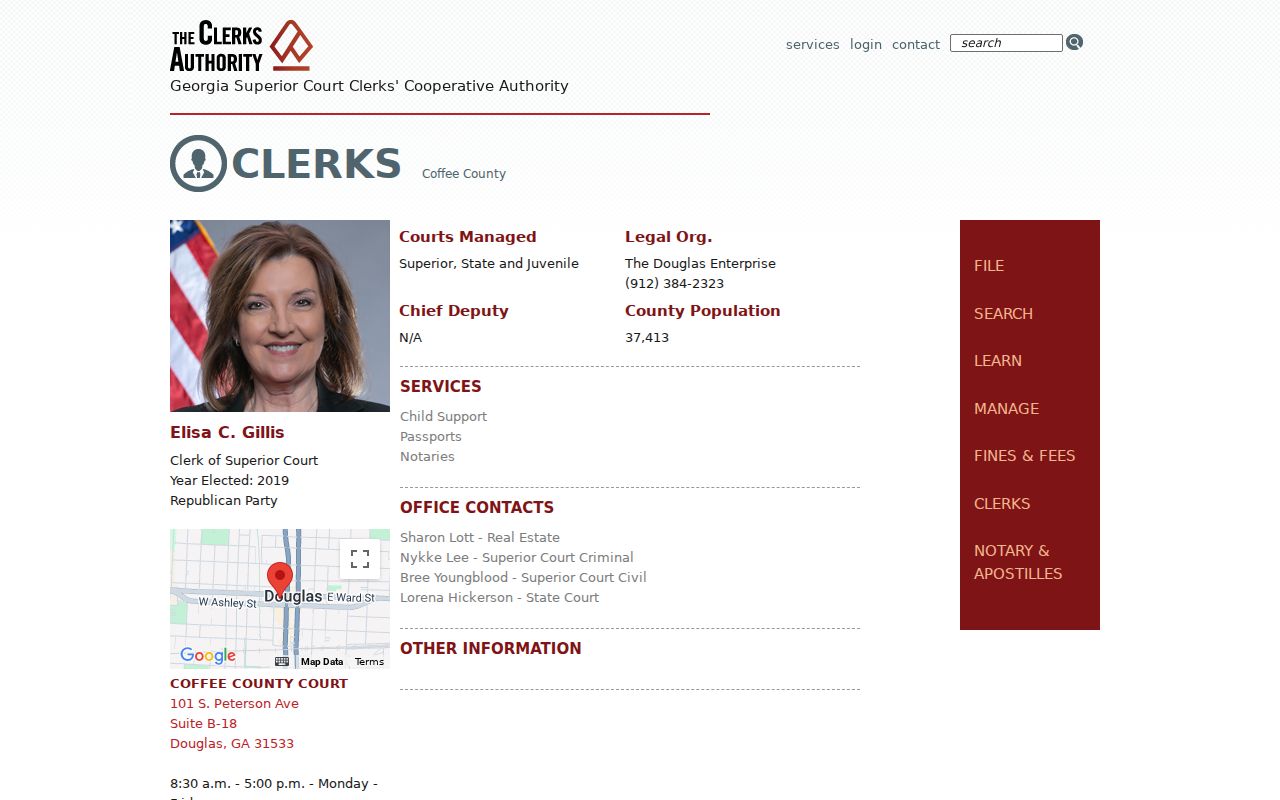
That office is the chief source for filed pleadings, docket sheets, judgments, and certified dispositions in Coffee County criminal cases.
Three Coffee County Case Counters
Douglas has three nearby counters that answer different criminal-record questions. The courthouse clerk holds filed Superior and State Court cases. The sheriff and jail at Thompson Drive hold booking, custody, and sheriff-created records. Douglas Police at West Bryan Street supplies city incident and accident reports. Asking the wrong custodian can yield no record even when another office has it.
| Need | Custodian | Best contact |
|---|---|---|
| Felony or misdemeanor disposition | Coffee court clerk | 912-384-2865 |
| Booking or sheriff report | Coffee Sheriff or jail | 912-384-4227 or 912-383-6398 |
| Douglas incident report | Douglas Police | 912-384-2222 |
A Douglas report copy costs $2 under the city's police-report instructions. It can document the initial event, but it cannot replace the later Coffee County court disposition.
The official report FAQ shows that separate city channel.
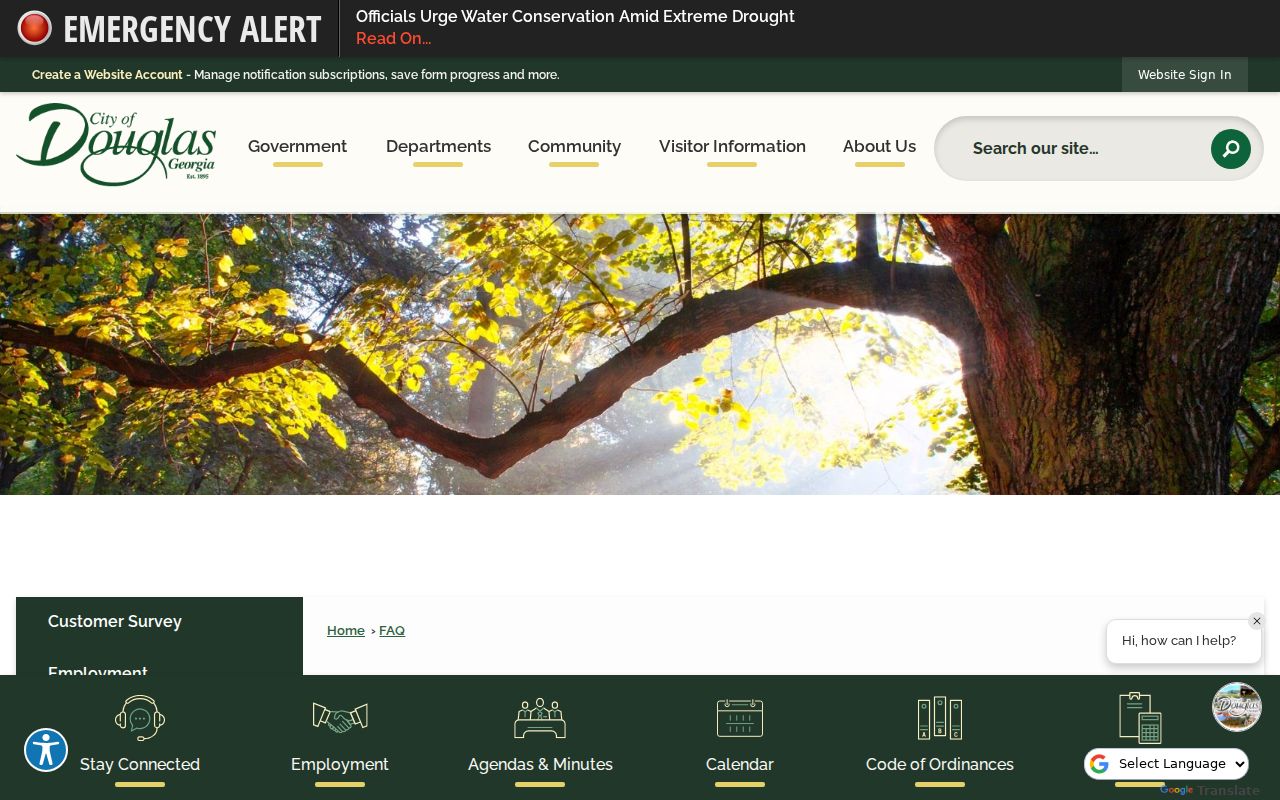
Use the incident date, location, and victim name requested by Douglas Police, then match any resulting prosecution by court and case number.
How to Search Case Records
Georgia has no single comprehensive public trial-court database. The Judicial Council's E-Access to Court Records directory routes participating courts to provider systems and warns that an account is required. Coffee County was not listed when the directory was inspected on July 17, 2026, so do not assume that a statewide screen contains Coffee Superior or State Court records. Start with the directory, but plan to call the Coffee clerk when no working provider appears.
- Decide whether the matter is a felony, misdemeanor, preliminary warrant matter, juvenile case, or Douglas city citation.
- Check Georgia E-Access for the relevant Coffee court and provider. Create an account if that provider requires one.
- Use the exact case number when possible. Otherwise supply the full party name, filing year, and court.
- Record the case number, filing date, status, charge, docket events, plea, disposition, and sentence.
- Call or visit the Coffee clerk for certified dispositions, archived records, and papers absent online. Confirm current copy fees first.
| Field Label | Type | Required | Notes |
|---|---|---|---|
| Court | Provider selection | Yes | Choose Coffee Superior or Coffee State if offered. |
| Case number | Text | No | The most exact search key. |
| Party name | Text | No | Use full legal spelling and try variants. |
| Filing year | Date or filter | No | Helps separate people with the same name. |
| Case type or status | Select | No | Narrows criminal cases and open or closed files. |
Coffee County Case Clerk Fallback
The clerk is the reliable fallback when a Coffee County criminal case is old, missing from a provider, sealed from public display, or needed in certified form. Give the criminal desk a name, approximate filing date, court, and known case number. Ask whether the file is Superior or State Court and whether it is archived. No current official criminal-copy fee schedule was found, so confirm plain-copy and certification costs before ordering.
Coffee Court Clerk
101 S. Peterson Ave., Suite B-18
Douglas, GA 31533
912-384-2865
Monday-Friday, 8:30 a.m.-5 p.m.
The Waycross Circuit lists no current Coffee calendar. Court-date questions should therefore go to the clerk. One circuit directory writes the suite as 218B, while GSCCCA uses B-18; use the GSCCCA form when addressing a request.
The state warrant guide shows why court and sheriff checks may both be needed.
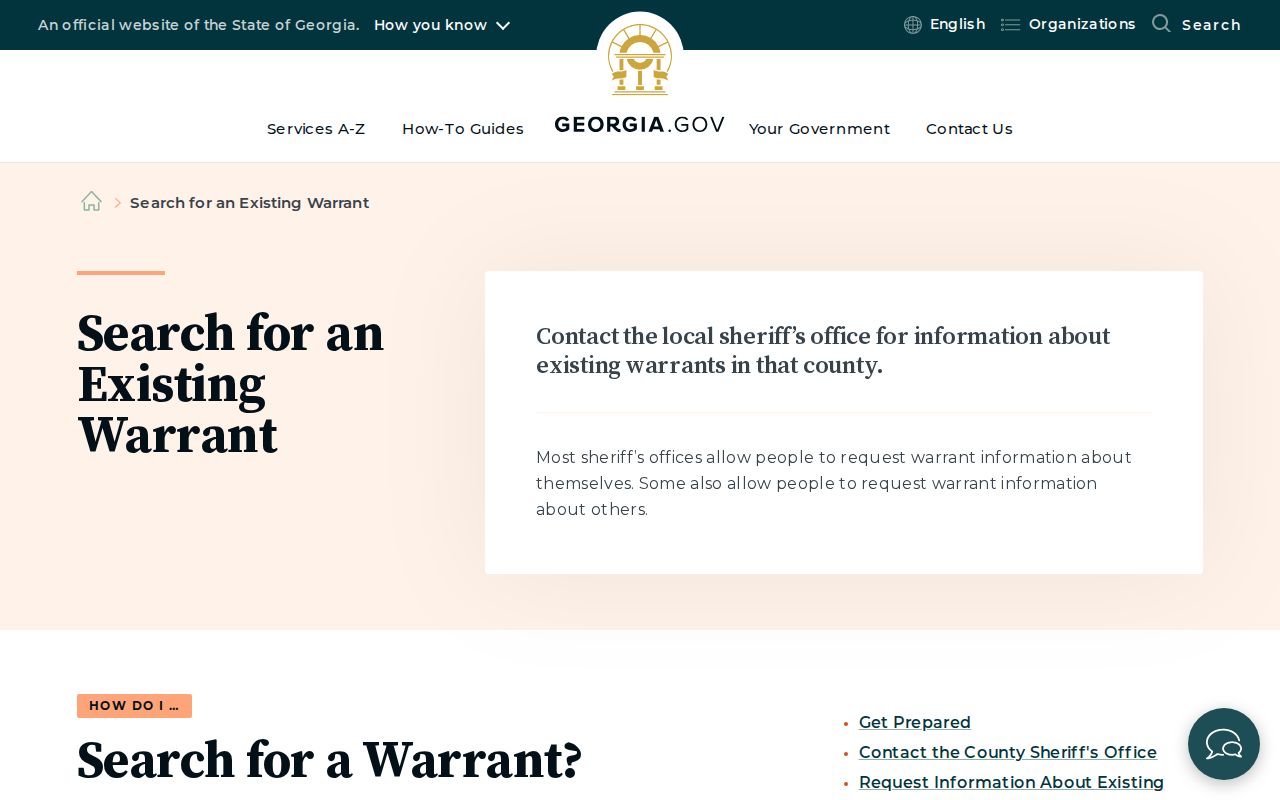
A public docket-linked warrant may be confirmed through the clerk, while sheriff custody and service details belong with the sheriff.
What the Case File Shows
A Coffee County case file documents one prosecution. It differs from a GCIC criminal-history record, which links multiple reported arrest cycles and dispositions. Read the charging paper and the final judgment together. Arrest charges may change when the district attorney files an indictment or the solicitor-general files an accusation.
| Case Number & Court | Identifies the single prosecution and whether Superior or State Court owns it. |
|---|---|
| Charging Document | The indictment, accusation, or complaint states the charges actually filed. |
| Docket Entries | A dated index of filings, motions, orders, notices, and hearings. |
| Hearing Dates | Scheduled or completed arraignments, motion hearings, pleas, and trials. |
| Disposition & Judgment | The outcome, such as guilty, acquitted, dismissed, nolle prosequi, or no bill. |
| Sentence & Conditions | Custody, probation, fines, and other terms ordered after a conviction. |
Coffee County Disposition Terms
Short codes can change the meaning of a Coffee County criminal case. The Georgia Department of Human Services publishes an official disposition glossary. A disposition is the reported outcome, not merely the first charge.
- Nolle prosequi
- The prosecutor elects not to continue the charge.
- No bill or NPGJ
- A grand jury does not return an indictment.
- Dismissed or DISM
- The charge ends without a guilty judgment.
- Nolo contendere
- A no-contest plea that is treated as a conviction for record-reading purposes.
- First Offender
- A deferred adjudication that may later show discharge and exoneration after successful completion.
Do not stop at an arrest count or the first docket line. Open the judgment or obtain a certified disposition when the precise outcome matters.
The Coffee prosecutor directory identifies the offices that file felony and misdemeanor charges.

The district attorney serves Superior Court matters, while the solicitor-general handles State Court prosecutions.
Stages of a Criminal Case
A case file begins when a prosecutor files charges, not when the jail books an arrest. At arraignment, the court states the formal charge and receives a plea. Pretrial entries can include discovery notices, motions, bond orders, and scheduling. A negotiated plea may end the case without trial. Otherwise, the judge or jury reaches a verdict. The clerk then records the disposition and any sentence. Appeals create a separate record trail after final judgment.
Case flow: Charges Filed › Arraignment › Pretrial › Plea or Trial › Disposition › Sentencing
The Waycross Judicial Circuit directory identifies Coffee County's judges and justice offices.
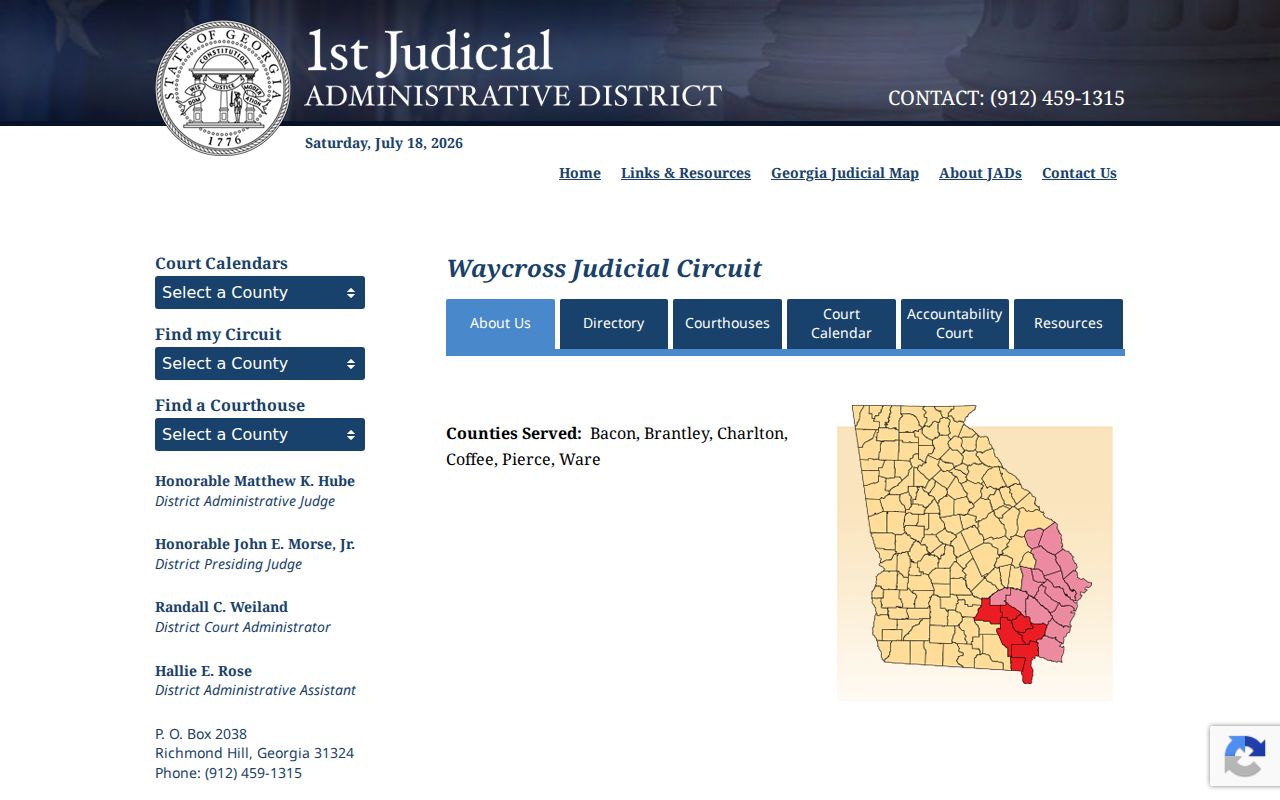
Its circuit-wide structure explains why some judges and offices use Waycross addresses even when the Coffee County file stays with the Douglas clerk.
Coffee County Drug Court
The Waycross Circuit operates a Superior Court Drug Court serving Bacon, Brantley, Coffee, Pierce, and Ware counties. The official directory lists Stephanie Goddard as program coordinator at 912-287-4350. A specialty-court track may add screening, program, compliance, and graduation or termination entries to the underlying Superior Court case.
Drug Court does not create a substitute public docket. Search the Coffee Superior Court file for the formal plea, court orders, disposition, and sentence. Program records may carry confidentiality limits beyond the open court entries. The circuit lists no alternative dispute resolution program and no online Coffee calendar.
The Coffee jail FAQ illustrates a separate custody record source.
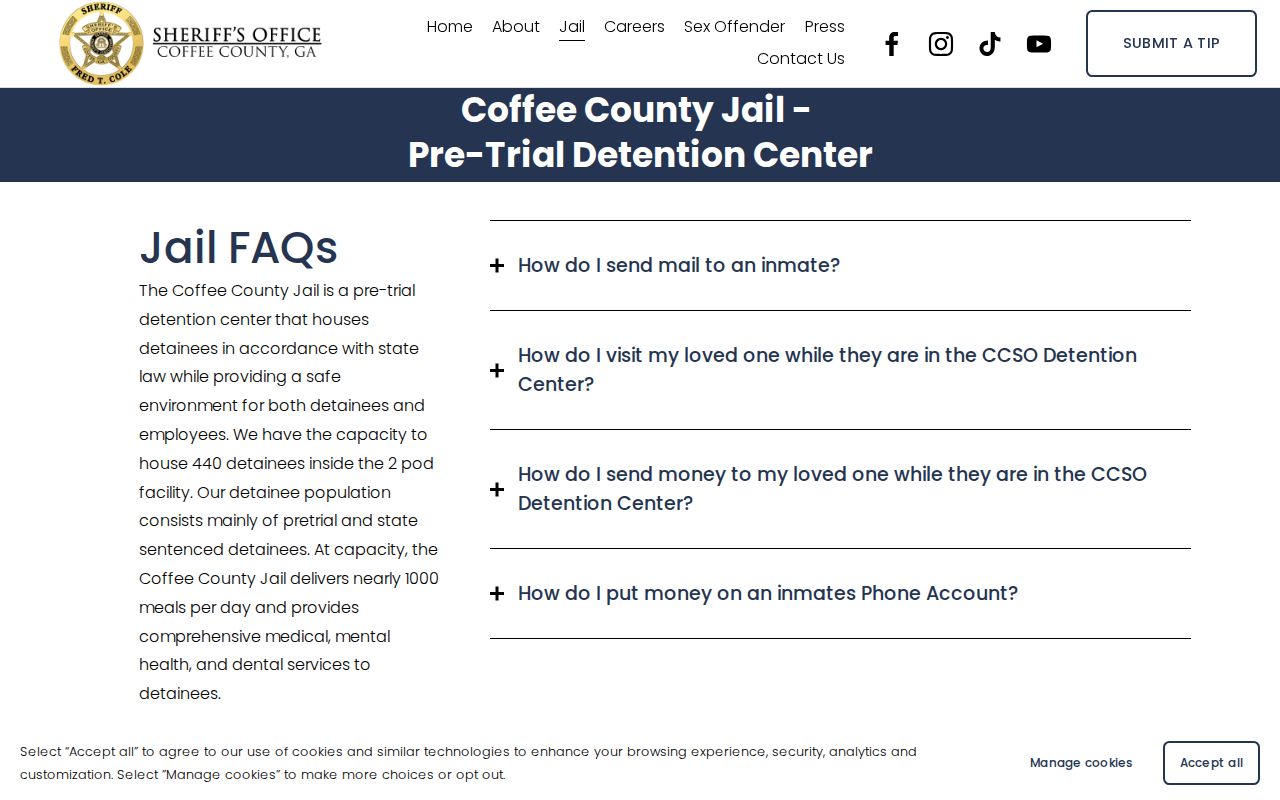
Jail rules and custody information do not establish whether Drug Court or another court process resolved the charge.
Coffee County Case Record Control
Several justice officials shape a Coffee County criminal case, but they do not hold the same records. Clerk Elisa C. Gillis maintains the Superior and State Court files. District Attorney Marilyn Bennett's office prosecutes felony matters in Superior Court, while Solicitor-General Katherine Paulk Roberts handles State Court prosecutions. Waycross Circuit Public Defender Tracy Larkey's office represents eligible defendants, but defense files are not substitutes for the public court docket.
The official prosecutor directory and public-defender directory help identify the proper office. Request the indictment, accusation, plea, order, judgment, or sentence from the clerk. Questions about why a charge was filed belong with the prosecutor, while requests for one's own defense file belong with counsel.
Access & Restrictions
Georgia court records are generally open, but access is not absolute. Juvenile files, sealed matters, protected victim data, medical facts, and personal identifiers may be restricted or redacted. Record restriction under O.C.G.A. § 35-3-37 limits public criminal-history access but does not destroy the record. A separate court sealing order may affect court papers. Ask the clerk whether a file exists and whether an access order controls it when no public result appears.
The Georgia Open Records Act generally requires a response within three business days, but courts also apply judicial-record rules and sealing orders. An office need not create a new summary. Request an existing docket, order, judgment, or certified disposition by name and case number. Under O.C.G.A. § 35-3-38, unauthorized obtaining, use, or dissemination of protected criminal-history information can be a crime.